
A company's biggest calls get made under pressure, with whatever process is to hand.
These are the decisions that quietly decide whether a company works. The tools here make them properly, with a process you can run again.
Most of the decisions covered here were made the hard way first. The frameworks are what was left once the expensive lessons were paid for.
Every pack includes an interactive tool and a structured PDF.
It's free because it's the clearest way to see how these tools are built. Use it. If it improves how you make decisions, you'll know what to expect from the rest of the range.
The same handful of decisions, missed the same handful of ways.
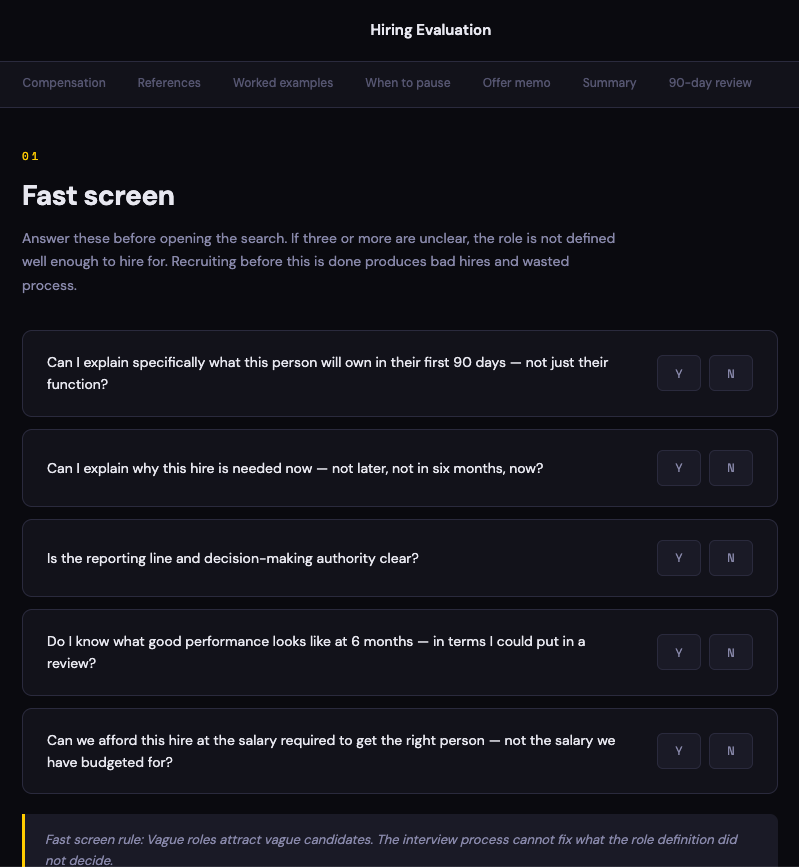
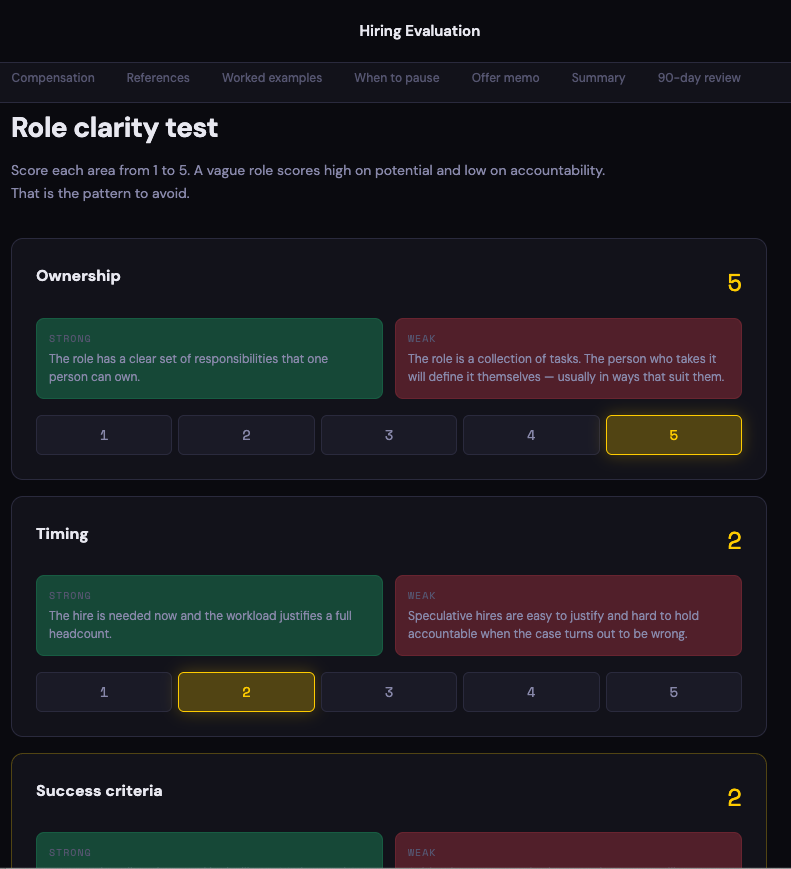
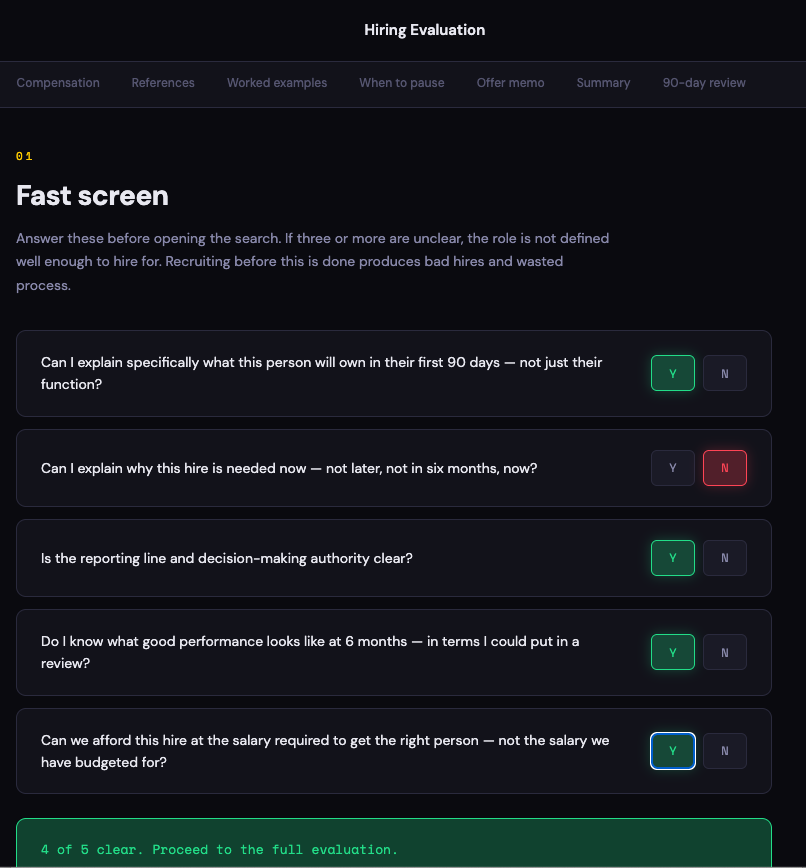
Eight core evaluation packs
The calls most founders make on instinct, on a busy afternoon, with half the information they wanted. Each pack walks the decision in order, so pressure stops doing the thinking for you.



Five entry evaluation packs
Lower stakes than the core packs, but they go wrong in the same places. These are the calls you face early, before there is much to fall back on.


Three sets
Grouped for the stretches where these decisions tend to arrive together rather than one at a time. Each set costs less than buying the packs on their own.

Good operators keep rebuilding the same decision tools from scratch.
Run anything for long enough and you notice it. The same scoring grid for a senior hire. The same questions before signing a partner. The same rough check before committing real money. You rebuild it each time, because the last version is in a doc you can no longer find, and because in the moment it feels faster to just think it through again.
What you learn, slowly and at some expense, is that most poor decisions are not made by people who lacked the information. The information was usually there. What was missing was a way to weigh it that did not bend to whoever spoke last, or to the deadline. Bad calls rarely look bad on the day they are made. The cost shows up a quarter or two later, attached to a decision nobody wrote down.
These sheets are those rebuilt tools, finished properly and kept in one place. Every one started as a real decision that mattered, made under real conditions, sometimes well and sometimes badly. The structure is simply the part that kept working.
The dull questions get asked first. Most decisions come apart on the obvious thing nobody said out loud, not the subtle one.
Built for the decision as you actually meet it, late and contested, not the tidy version that turns up in a textbook.
Confidence and evidence feel identical in the moment. The scoring exists to tell them apart before you commit.
Most frameworks die because nobody opens them twice. These are short enough that you will reach for them again.
Secure checkout through Gumroad
The whole range lives there. The files are yours the moment you buy, nothing to wait for.